
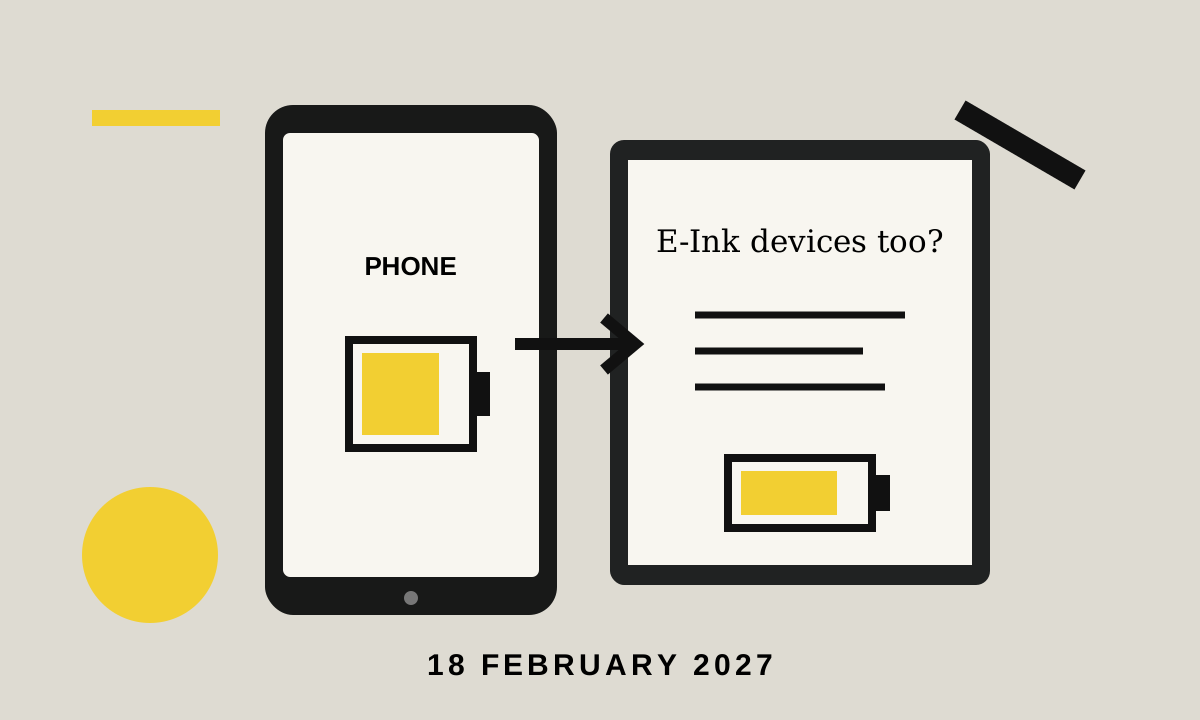
From 18 February 2027, products sold in the EU that contain portable batteries must generally let the end user remove and replace the whole battery during the product's lifetime. That includes smartphones and can also cover tablets and E-Ink devices. It does not require a battery to pop out without tools.
What the law actually requires
Article 11 of the EU Batteries Regulation says portable batteries must be readily removable and replaceable by the end user. A battery counts as readily removable when a person can take it out using tools that are commercially available.
Manufacturers cannot require proprietary tools, heat or solvents to disassemble the product. A specialized tool is allowed only when it is supplied free with the product. Instructions and safety information must also remain available online in language that ordinary users can understand.
So phones do not need an old-fashioned battery door
The rule does not force manufacturers to bring back the plastic back cover you could pull off with a thumbnail. A sealed-looking phone can comply if its battery is accessible with ordinary tools and can be replaced safely without damaging the product.
That could still require screws, clips and careful handling. The important change is that glue, heat and manufacturer-only equipment should no longer be routine barriers to a battery replacement.
It matters to E-Ink tablets too
The law is written around products containing portable batteries rather than smartphones alone. That means E-Ink notebooks and reading devices sold in the EU may also need designs that allow the user to replace the battery, unless a valid exemption applies.
Supernote is already moving in this direction. Its repairable approach and replaceable-battery messaging make more sense in a market where buyers increasingly expect a notebook to last longer than its original battery.
Replacement batteries must remain available
The regulation says compatible batteries must be available as spare parts for at least five years after the last unit of a model is placed on the market. Prices must be reasonable and non-discriminatory for end users and independent repairers.
Software cannot be used to block a compatible replacement battery or its key components. This matters because a physically replaceable battery is not much use if the device rejects it after installation.
There are exemptions
Some products may limit replacement to independent professionals when they are designed mainly for wet environments and user replacement would create a safety problem. Certain medical equipment is also covered by professional-replacement exemptions. Products that need an uninterrupted permanent power connection for safety or data integrity can fall outside the general rule.
The European Commission added further product categories to the exemption list in July 2026, including some wearables and electric toys. That is why saying every battery in every portable device must be directly replaceable by its owner is too broad.
When does it start?
Article 11 applies from 18 February 2027. The requirement concerns products placed on the EU market, so it shapes what manufacturers can sell rather than ordering owners to modify devices they already have.
What buyers should look for
- Published battery-removal instructions.
- Access using ordinary tools rather than heat or solvents.
- A replacement battery sold at a sensible price.
- No software lock that rejects a compatible part.
- A clear repair and spare-parts policy covering the useful life of the device.